Yarn Numbering System

thumbnail
Yarn numbering system
There are two ways of yarn numbering system. Direct system and indirect system.

Direct System (Denier)
In direct system (fixed length), yarn number wqual to the weight of yarn in a certain length of yarn (…gram/9000 m = denier, or text = …. Gram/1000 m). in this system, the higher the number means, the coarse the yarn. This system is used for filament yarn. Denier system is more popular than tex system in practice.

Td = weight(gram)/length (9000 m)    tex=weight (gram)/length (1000 m)

Indirect system
Meanwhile, the indirect system (fixed weight). Yarn count is numbering system for staple spun yarns. In this system, the higher the number, the finer the yarn.
a.       English cotton system (Ne1)
In English system, yarn count = number of yarn length ( in hank) which equal to one pounds weight of yarn. (1 hank = 840 yards; 1 pound (lb) = 453.6 gram)

Ne1 =Length (hank=840 yds)/Weight in pound (453.6 g)

b.      Metric yarn-count system (Nm)
Nm is an internationally used numbering method for all spun yarn. This standard expresses the length of yarn ( in Kilometers) per kilogram of weight

Nm=length (km/m)/weight (kg/g)

c.       Worsted Yarn Count system (Ne3)
Ne3 is used for worsted (wool and wool blend) or wool yarns with longer finger length. The yarn is expressed in the reverse order such as 1/50. Yarn count= number of yarn length ( in hank=560 yarn) which equal to one pounds weight of yarn. 1 count of worsted wool is measured by 560 yards in one pound of yarn

Ne3=length (hank=560 yds)/weight in pound (453.6 g)


Ne1 (English sytem ) is more popular in use than Nm (metric system)
Example ;for filament yarn, normally uses direct system : Td= denier, or tex. Meanwhile for spun yarn using indirect system: ne1 for cotton or cotton blended yarns, and Ne3 for worsted yarns. Nm can be used for all spun yarns

Count Conversion


the process of making yarn

thumbnail

the process of making yarn
 the process of making yarn
Yarn process
By definition, yarn is an assembly of substantial length and relatively small cross section of fibers and/or filaments with or without twist (textile institute)
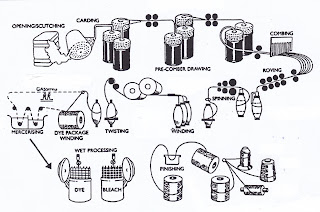
From fiber to yarn, there is a series of process such as blowing, carding, drawing, roving (flyer), spinning, and winding
First, in fact, blowing process consist of series of machineries that ended with scutching machine. The function of blowing process is to open the fibers from the balls, blending, cleaning, and lap forming.
Second machine is carding that has function cleaning, sorting out very short fibers from main fibers, and sliver forming. For yarn count below 40, third machine is drawing. Its function drafting fibers into more parallel, improving the evenness of weight per certain length, and silver forming.
Third, for fine yarn count, above 40, there will be combing process, which is done in combing machine. Combing function is to separate intended length of fibers to continue to next process (sorted out the short one), drafting, parallezing, improving the evenness, and silver forming
Fourth, roving or flyer machine, which function drafting, slight twisting, and winding in roving form.
Fifth, ring spinning machine, which function drafting, twisting and winding yarn in the form of bobbin. The last machine is winding, which function re- winding the yarns into cones or cheese winding form. In the case of opened end yarns, after process of drawing goes directly to open end spinning machine, which the same function with ring spinning, only different method.
For sewing thread, there will be additional process such as doubling, twisting, mercerizing, bleaching, dyeing, finishing, and finally re winding according to winding format intended.